
NORI /the app/
NORI /the app/
NORI /the app/
Client: Veronica Postupaylo
Focus: Brand Design · UX/UI Design · Illustration · Research
Role: Graphic Designer · Researcher · Illustrator
Client: Veronica Postupaylo
Focus: Brand Design · UX/UI Design · Illustration · Research
Role: Graphic Designer · Researcher · Illustrator
Client: Veronica Postupaylo
Focus: Brand Design · UX/UI Design · Illustration · Research
Role: Graphic Designer · Researcher · Illustrator
Problem: Many girls experience confusion, embarrassment, and emotional uncertainty during puberty, yet discussing these topics with parents can feel uncomfortable. The current market for puberty and mental health education is highly clinical and intimidating. As a result, engagement is low right when at-risk teens need it most. Furthermore, the friction of face-to-face communication creates a massive barrier between teens and their parents.
Insight: Girls are more likely to engage with content if it feels playful, personalized, and non-judgmental. The odds will go even higher if the interaction is digital instead of face-to-face. Therefore, to drive daily engagement with health education, we have to Trojan-horse it inside formats teenagers already love and interact with daily: texting and gaming.
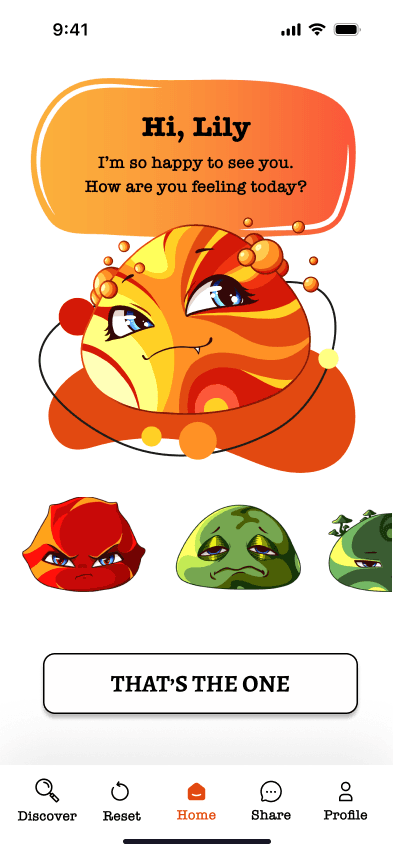
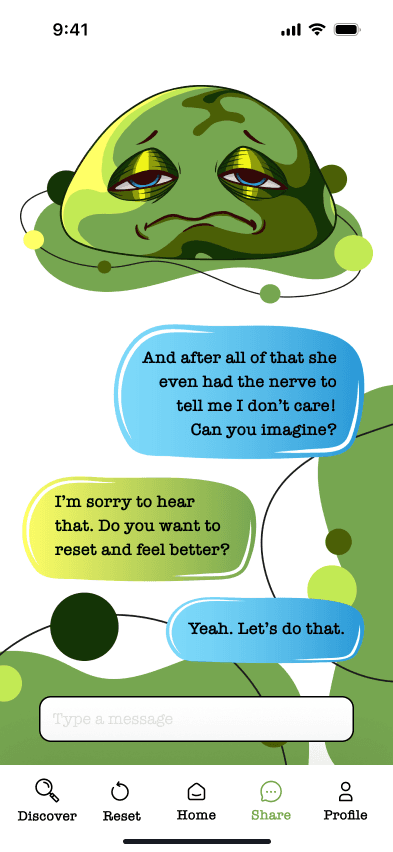
Solution: Considering human behavioral psychology, I created a Tamagotchi-style app to encourage daily check-ins and interaction. Instead of feeling like they are logging medical symptoms or doing 'homework,' the users are simply caring for a digital companion.
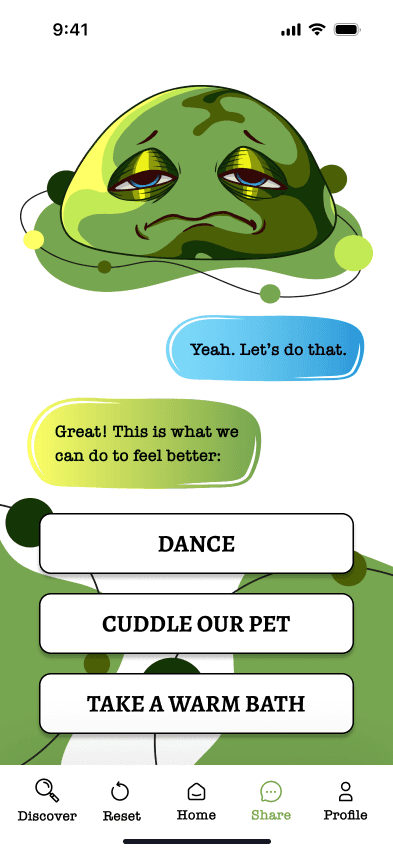
Additionally, I included tools for coping with emotional overwhelm in healthy ways, such as text-style journaling and personalized suggestions for what girls can do to feel better. Another important feature is the link to a parent’s phone, which allows girls (if they choose so) to share their feelings and emotional state with their parents without needing to communicate face-to-face.
Results:The final app is fun and easy to use. It has a warm, approachable, and relatable feel. Both the content and visuals align with the preferences of the target audience while delivering important information and opening lines of communication within families in a clear, non-judgmental, and comfortable way for the teenagers.
Problem: Many girls experience confusion, embarrassment, and emotional uncertainty during puberty, yet discussing these topics with parents can feel uncomfortable. The current market for puberty and mental health education is highly clinical and intimidating. As a result, engagement is low right when at-risk teens need it most. Furthermore, the friction of face-to-face communication creates a massive barrier between teens and their parents.
Insight: Girls are more likely to engage with content if it feels playful, personalized, and non-judgmental. The odds will go even higher if the interaction is digital instead of face-to-face. Therefore, to drive daily engagement with health education, we have to Trojan-horse it inside formats teenagers already love and interact with daily: texting and gaming.
Solution: Considering human behavioral psychology, I created a Tamagotchi-style app to encourage daily check-ins and interaction. Instead of feeling like they are logging medical symptoms or doing 'homework,' the users are simply caring for a digital companion.
Additionally, I included tools for coping with emotional overwhelm in healthy ways, such as text-style journaling and personalized suggestions for what girls can do to feel better. Another important feature is the link to a parent’s phone, which allows girls (if they choose so) to share their feelings and emotional state with their parents without needing to communicate face-to-face.
Results:The final app is fun and easy to use. It has a warm, approachable, and relatable feel. Both the content and visuals align with the preferences of the target audience while delivering important information and opening lines of communication within families in a clear, non-judgmental, and comfortable way for the teenagers.
Problem: Many girls experience confusion, embarrassment, and emotional uncertainty during puberty, yet discussing these topics with parents can feel uncomfortable. The current market for puberty and mental health education is highly clinical and intimidating. As a result, engagement is low right when at-risk teens need it most. Furthermore, the friction of face-to-face communication creates a massive barrier between teens and their parents.
Insight: Girls are more likely to engage with content if it feels playful, personalized, and non-judgmental. The odds will go even higher if the interaction is digital instead of face-to-face. Therefore, to drive daily engagement with health education, we have to Trojan-horse it inside formats teenagers already love and interact with daily: texting and gaming.
Solution: Considering human behavioral psychology, I created a Tamagotchi-style app to encourage daily check-ins and interaction. Instead of feeling like they are logging medical symptoms or doing 'homework,' the users are simply caring for a digital companion.
Additionally, I included tools for coping with emotional overwhelm in healthy ways, such as text-style journaling and personalized suggestions for what girls can do to feel better. Another important feature is the link to a parent’s phone, which allows girls (if they choose so) to share their feelings and emotional state with their parents without needing to communicate face-to-face.
Results:The final app is fun and easy to use. It has a warm, approachable, and relatable feel. Both the content and visuals align with the preferences of the target audience while delivering important information and opening lines of communication within families in a clear, non-judgmental, and comfortable way for the teenagers.
Research
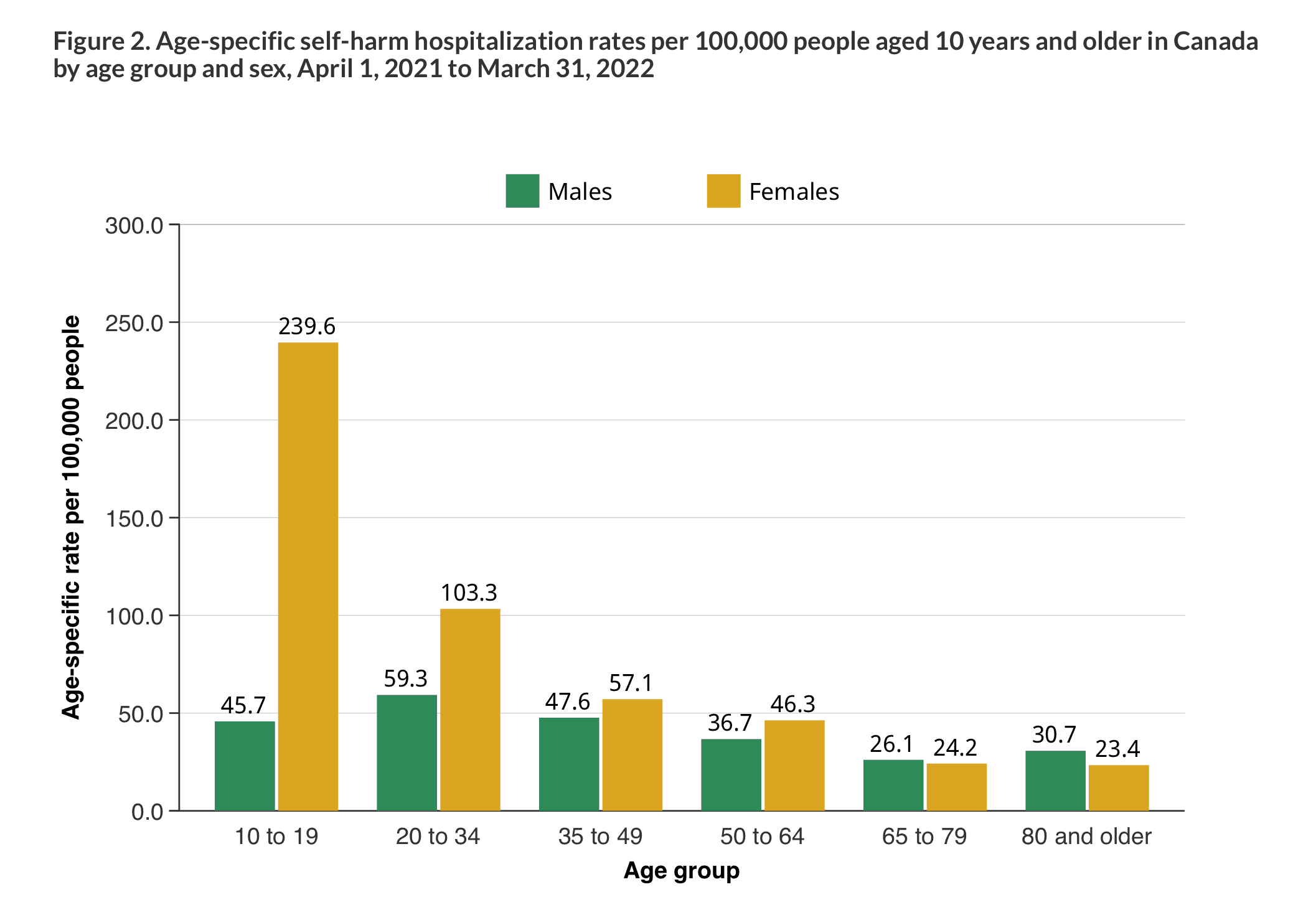
According to Statistics Canada, girls aged 10–19 are hospitalized due to self-harm about five times more often than the average of all other gender and age groups combined.
According to Statistics Canada, girls aged 10–19 are hospitalized due to self-harm about five times more often than the average of all other gender and age groups combined.
According to Statistics Canada, girls aged 10–19 are hospitalized due to self-harm about five times more often than the average of all other gender and age groups combined.
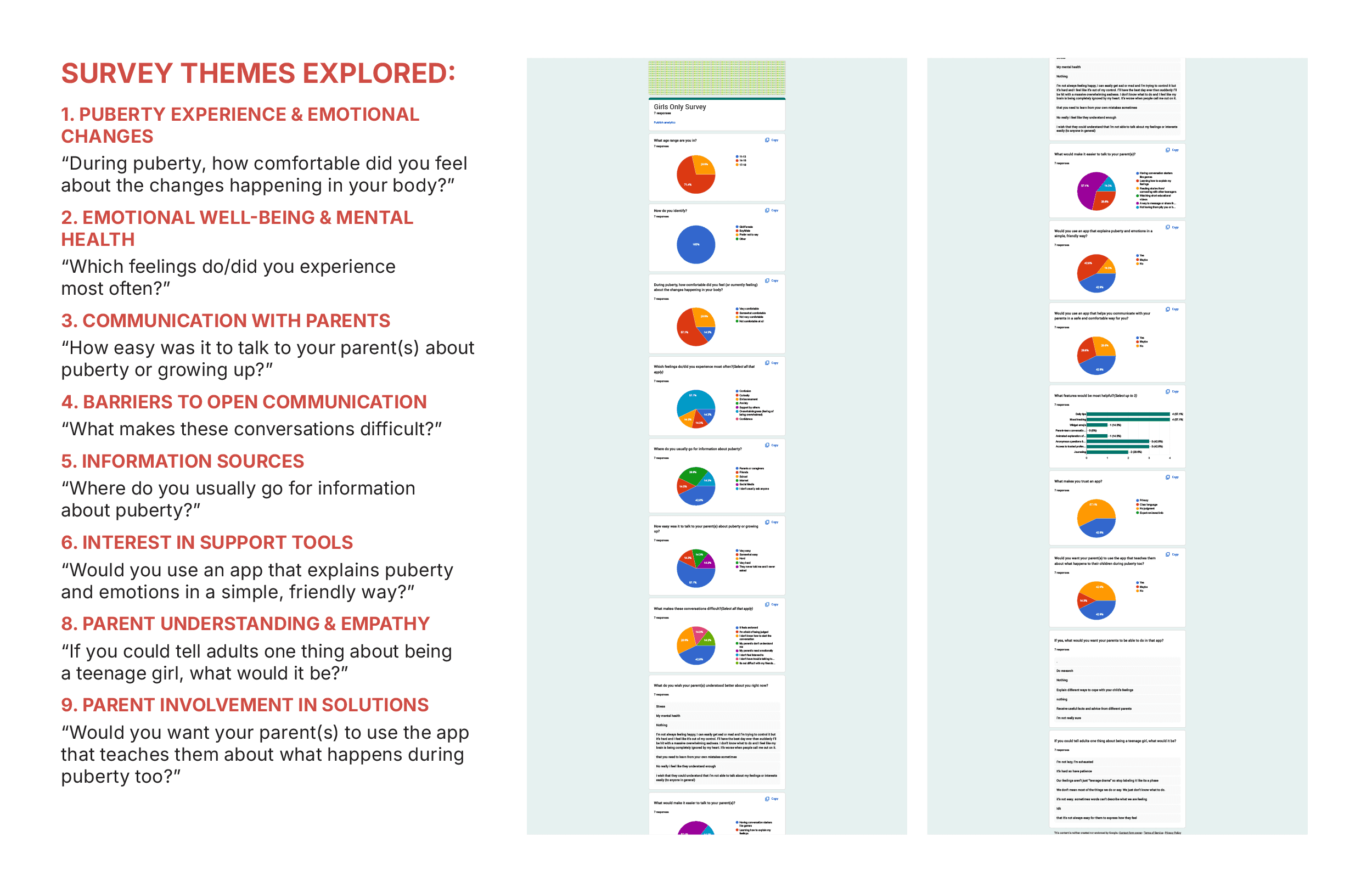
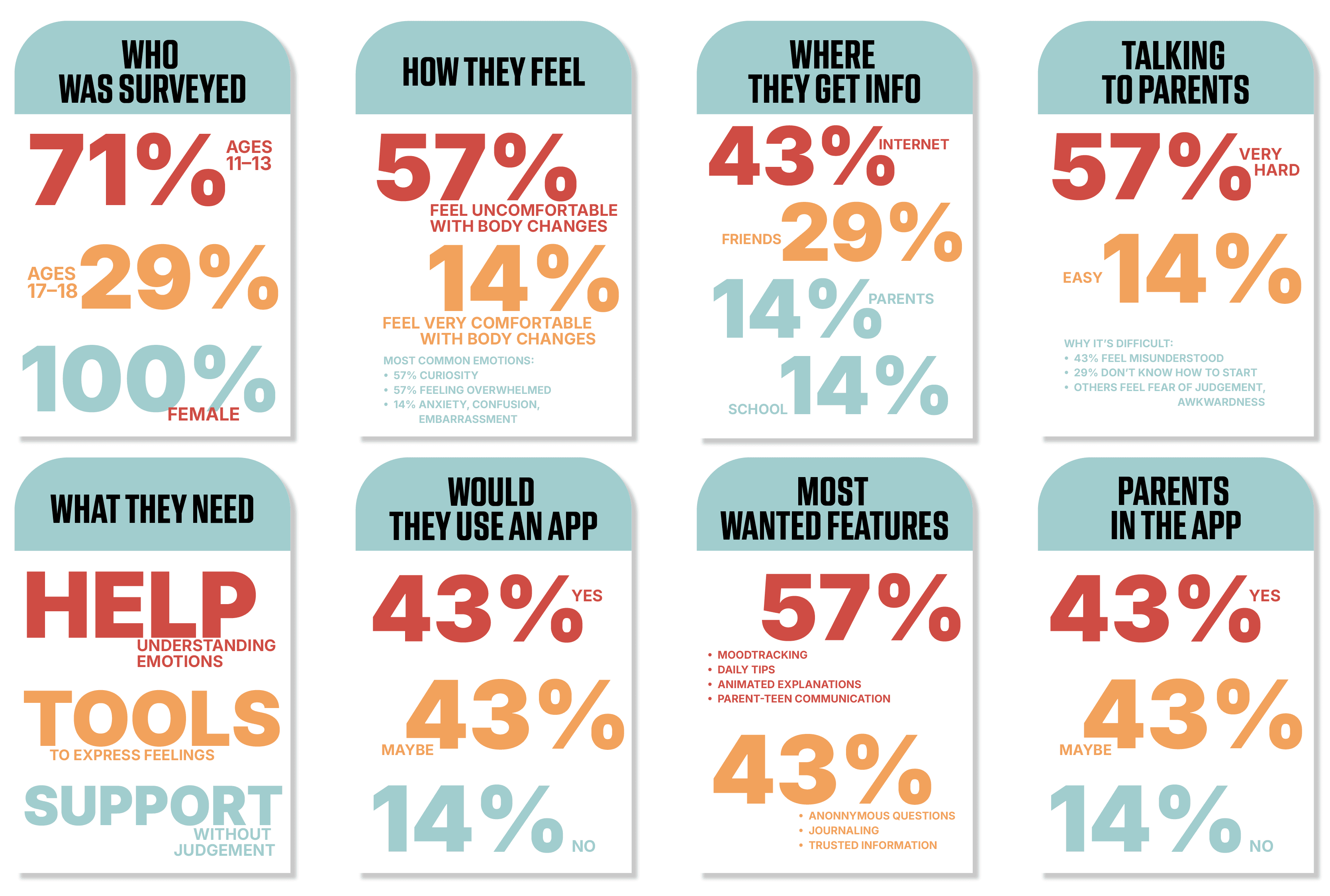
I also conducted my own research by sending out surveys to girls aged 11–17 within my circle of family and friends, and I received a very troubling response. Most of the responses were extremely raw and emotional, with girls admitting they could use help navigating puberty and communicating with their families about their emotional and physical state. Below is a short summary of the survey responses. Full responses and anonymous participant comments are available upon request.
I also conducted my own research by sending out surveys to girls aged 11–17 within my circle of family and friends, and I received a very troubling response. Most of the responses were extremely raw and emotional, with girls admitting they could use help navigating puberty and communicating with their families about their emotional and physical state. Below is a short summary of the survey responses. Full responses and anonymous participant comments are available upon request.
I also conducted my own research by sending out surveys to girls aged 11–17 within my circle of family and friends, and I received a very troubling response. Most of the responses were extremely raw and emotional, with girls admitting they could use help navigating puberty and communicating with their families about their emotional and physical state. Below is a short summary of the survey responses. Full responses and anonymous participant comments are available upon request.
Summary of results
NORI was created because too many girls go through puberty feeling confused, overwhelmed, and alone. It transforms a difficult stage of life into one that feels supported, empowering, and safe.
Development
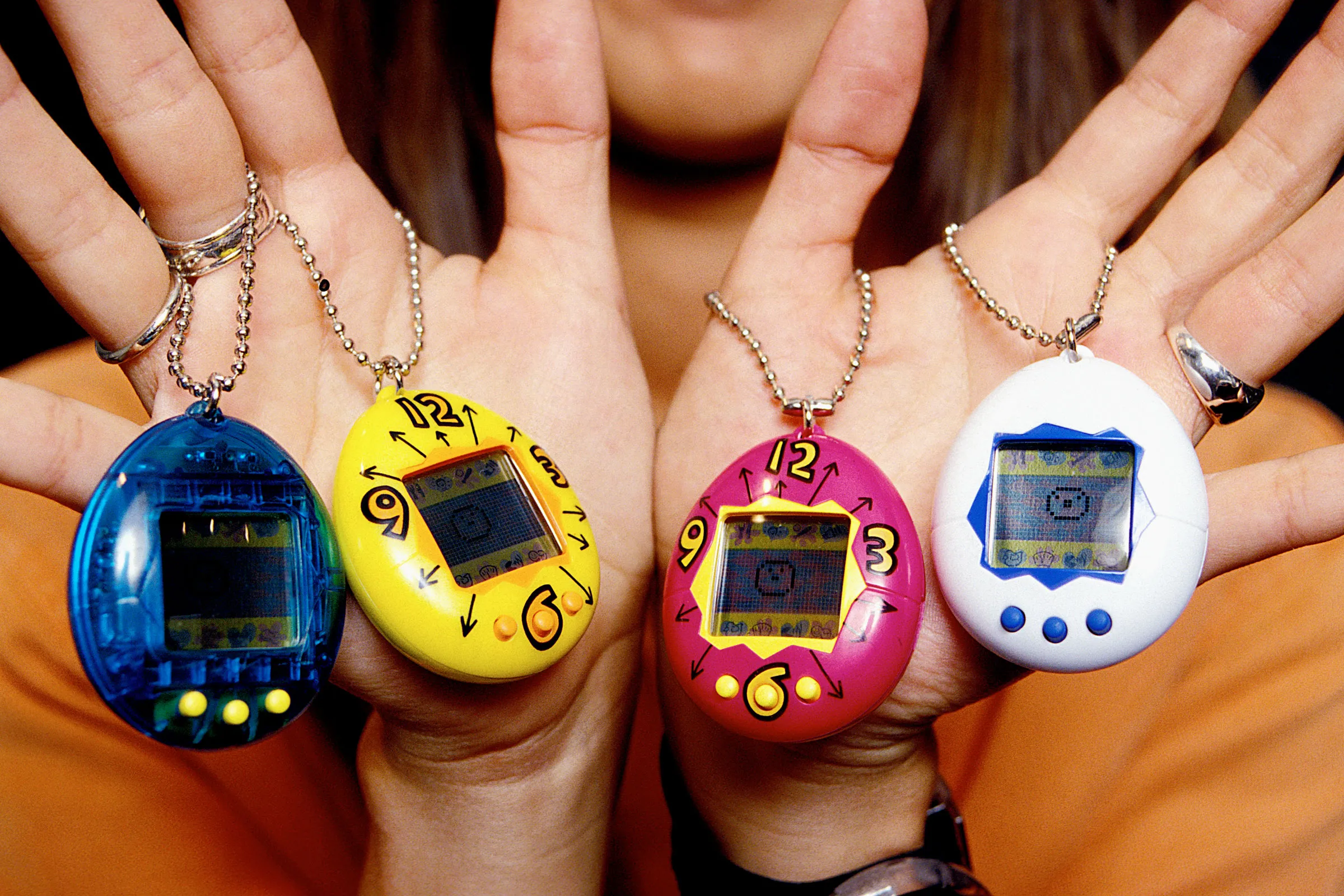
To hook girls 11–17 and drive daily engagement, Nori ditches the clinical app model for a gamified, Tamagotchi-inspired experience that taps into current cultural nostalgia. By pairing animated UX/UI with playful slab typography, the interface disarms users and turns intimidating puberty education into an approachable daily habit.
To hook girls 11–17 and drive daily engagement, Nori ditches the clinical app model for a gamified, Tamagotchi-inspired experience that taps into current cultural nostalgia. By pairing animated UX/UI with playful slab typography, the interface disarms users and turns intimidating puberty education into an approachable daily habit.
To hook girls 11–17 and drive daily engagement, Nori ditches the clinical app model for a gamified, Tamagotchi-inspired experience that taps into current cultural nostalgia. By pairing animated UX/UI with playful slab typography, the interface disarms users and turns intimidating puberty education into an approachable daily habit.
Brand Guidelines
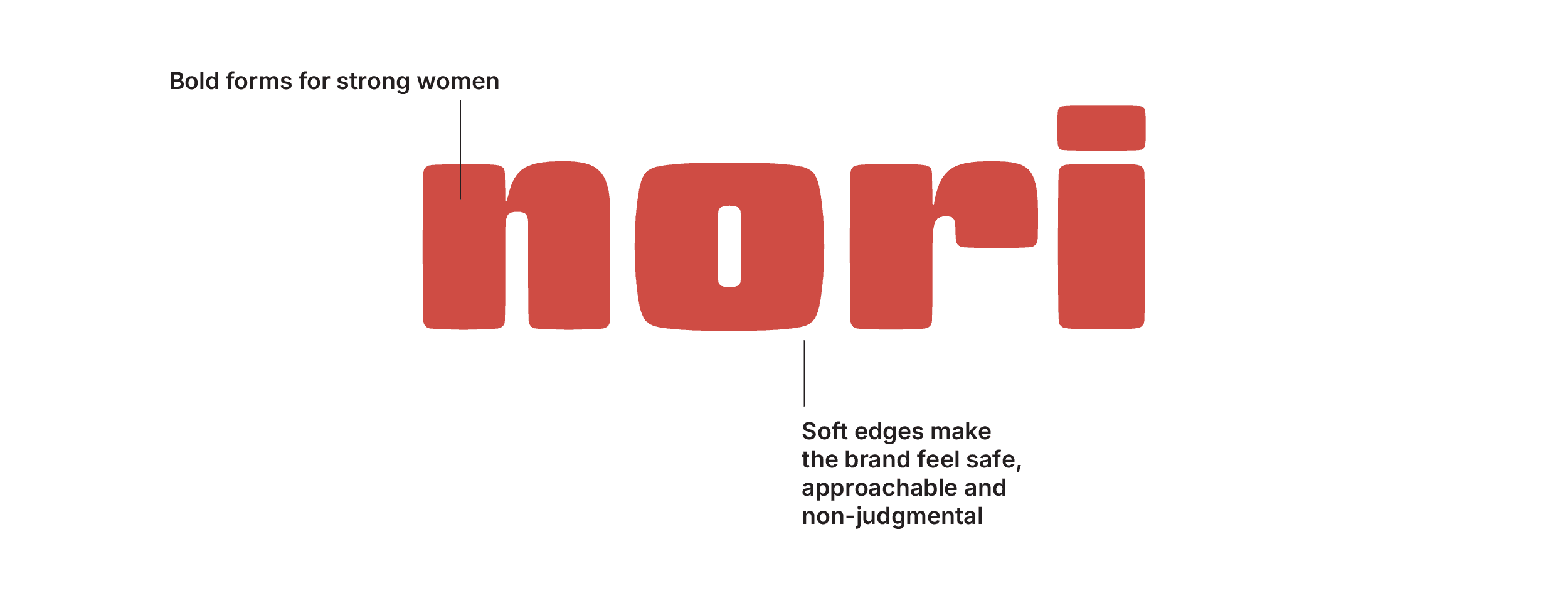
NORI’s logo uses Gigalypse font. It was chosen for its strong, bold forms to reflect the strong, bold women we want girls to grow up to become. It also has soft edges to those forms, which soften the feel and bring in a touch of femininity.
Fun fact: In Korean, the word “nori” means:
“play” or “activity”
Fun, playful experiences
Games or light activities
Something engaging and enjoyable
This word perfectly represents the main idea behind NORI - fun, playful experience to help girls grow up in a healthy way.
NORI’s logo uses Gigalypse font. It was chosen for its strong, bold forms to reflect the strong, bold women we want girls to grow up to become. It also has soft edges to those forms, which soften the feel and bring in a touch of femininity.
Fun fact: In Korean, the word “nori” means:
“play” or “activity”
Fun, playful experiences
Games or light activities
Something engaging and enjoyable
This word perfectly represents the main idea behind NORI - fun, playful experience to help girls grow up in a healthy way.
NORI’s logo uses Gigalypse font. It was chosen for its strong, bold forms to reflect the strong, bold women we want girls to grow up to become. It also has soft edges to those forms, which soften the feel and bring in a touch of femininity.
Fun fact: In Korean, the word “nori” means:
“play” or “activity”
Fun, playful experiences
Games or light activities
Something engaging and enjoyable
This word perfectly represents the main idea behind NORI - fun, playful experience to help girls grow up in a healthy way.
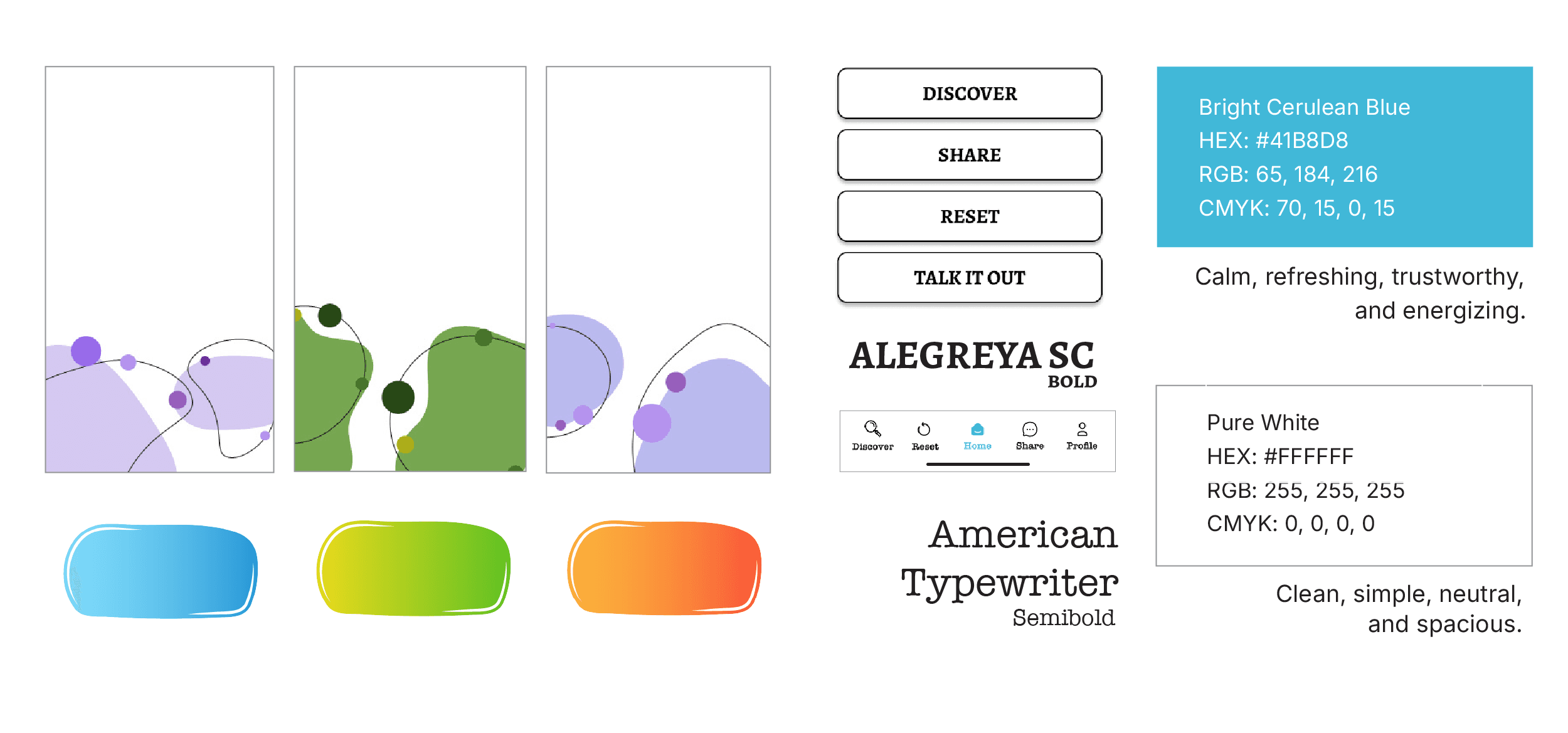
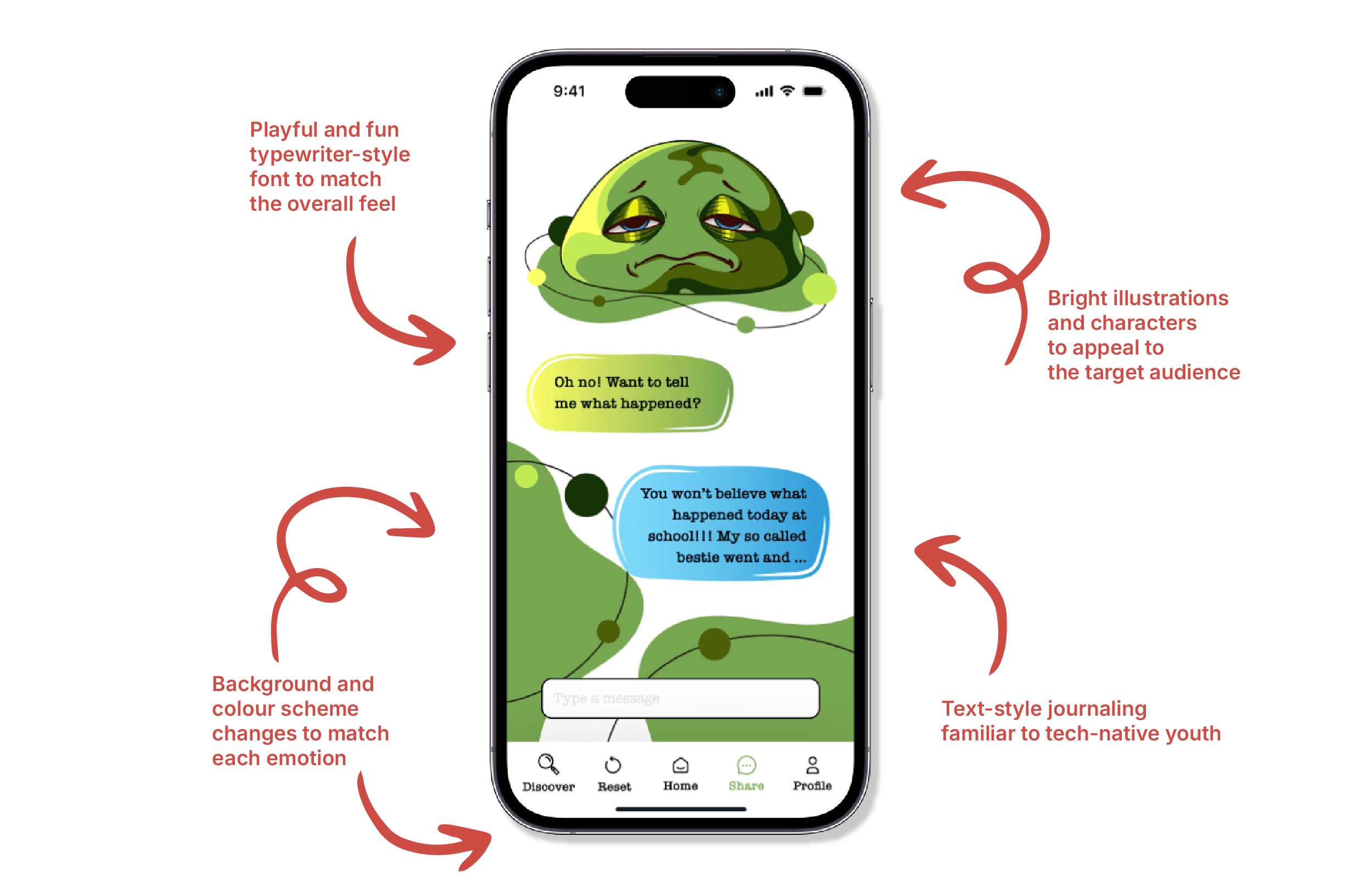
Colours, typography, and app elements are simple, fun, and illustrative to appeal to teenage girls. The bright palette feels positive and engaging, while the white base adds calm and trust, supported by playful accent colours that represent growth, confidence, and creativity. Bold, slab-serif fonts create strength and empowerment, while adding a friendly and relatable feel. Rounded buttons, clean layouts, and playful shapes make the app welcoming, easy to use, and visually enjoyable.
Colours, typography, and app elements are simple, fun, and illustrative to appeal to teenage girls. The bright palette feels positive and engaging, while the white base adds calm and trust, supported by playful accent colours that represent growth, confidence, and creativity. Bold, slab-serif fonts create strength and empowerment, while adding a friendly and relatable feel. Rounded buttons, clean layouts, and playful shapes make the app welcoming, easy to use, and visually enjoyable.
Colours, typography, and app elements are simple, fun, and illustrative to appeal to teenage girls. The bright palette feels positive and engaging, while the white base adds calm and trust, supported by playful accent colours that represent growth, confidence, and creativity. Bold, slab-serif fonts create strength and empowerment, while adding a friendly and relatable feel. Rounded buttons, clean layouts, and playful shapes make the app welcoming, easy to use, and visually enjoyable.
The Blob
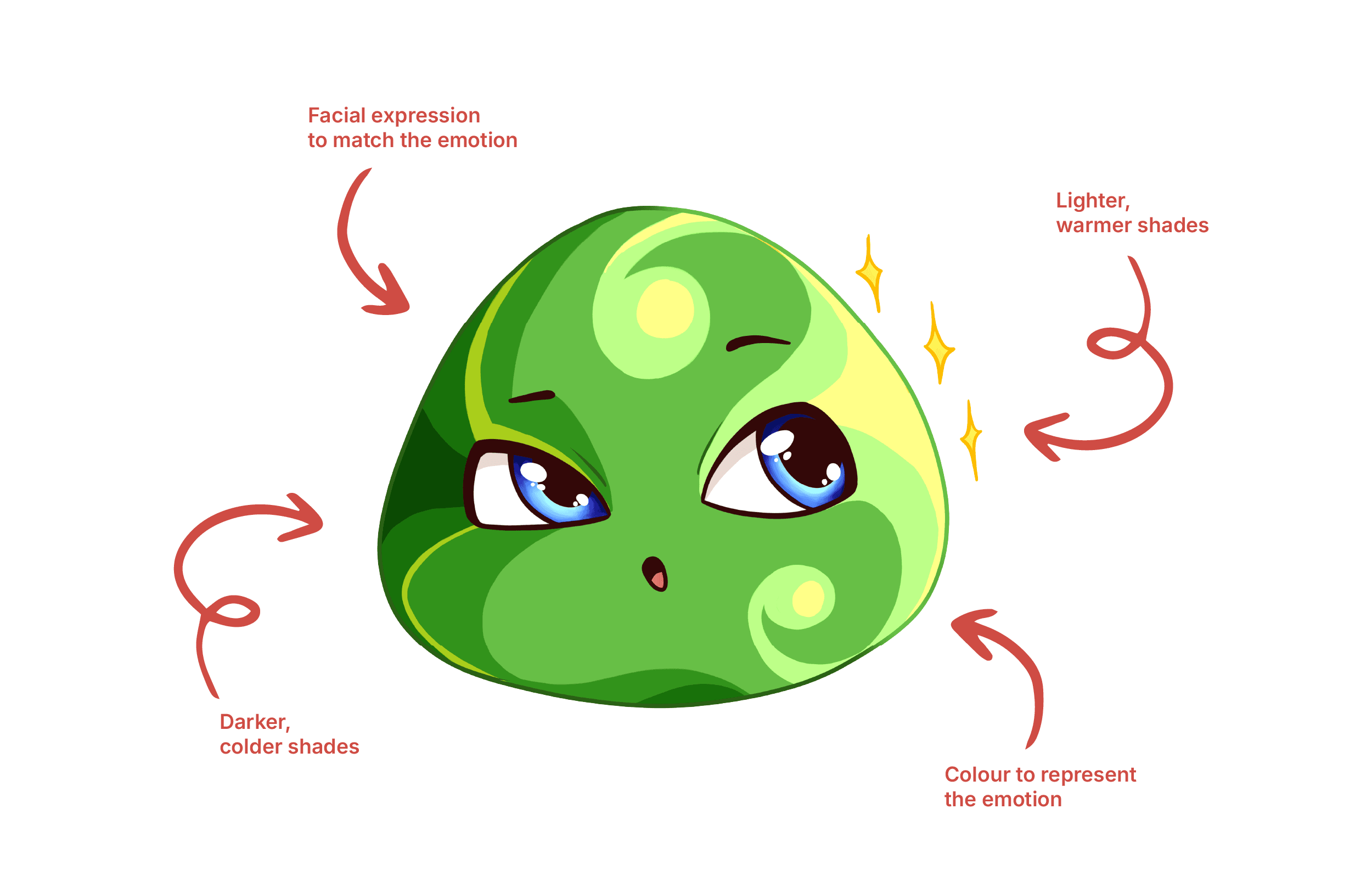
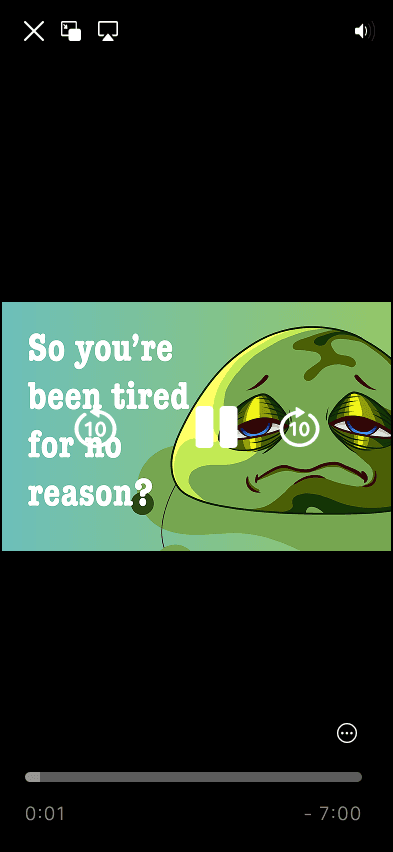
Mascots create emotional distance that allows users to observe their wellbeing objectively. Users often struggle to evaluate themselves, but they can easily recognize when the creature they're caring for appears exhausted or sick.
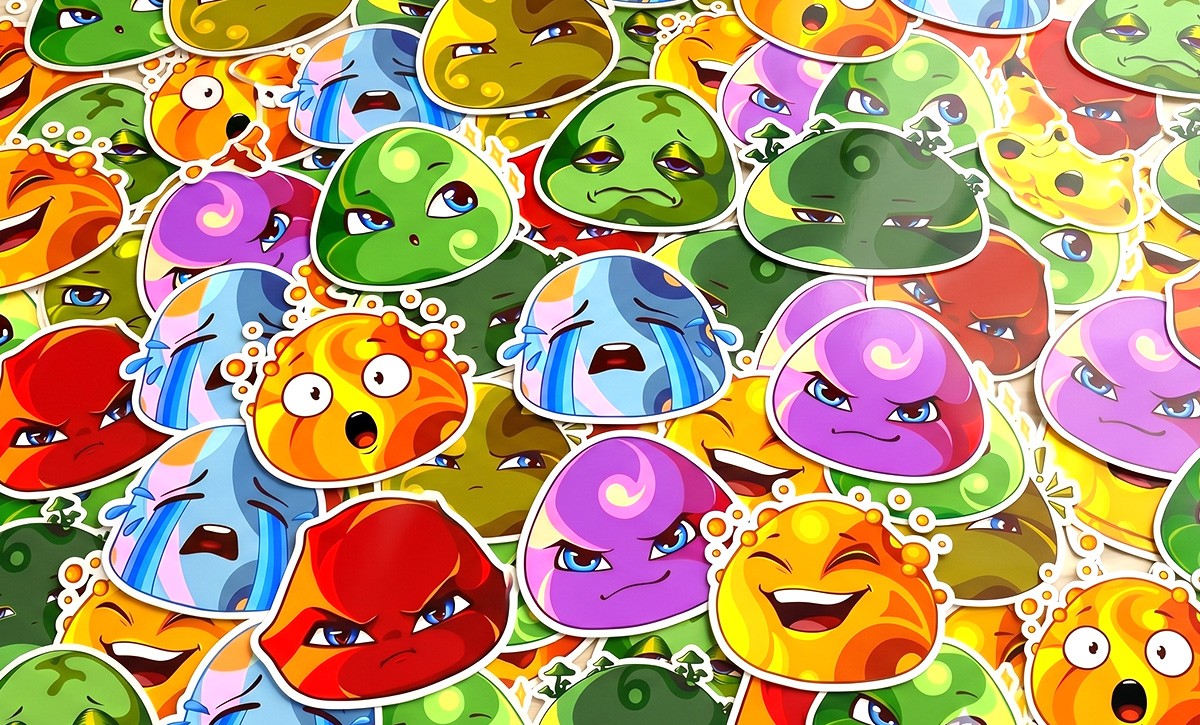
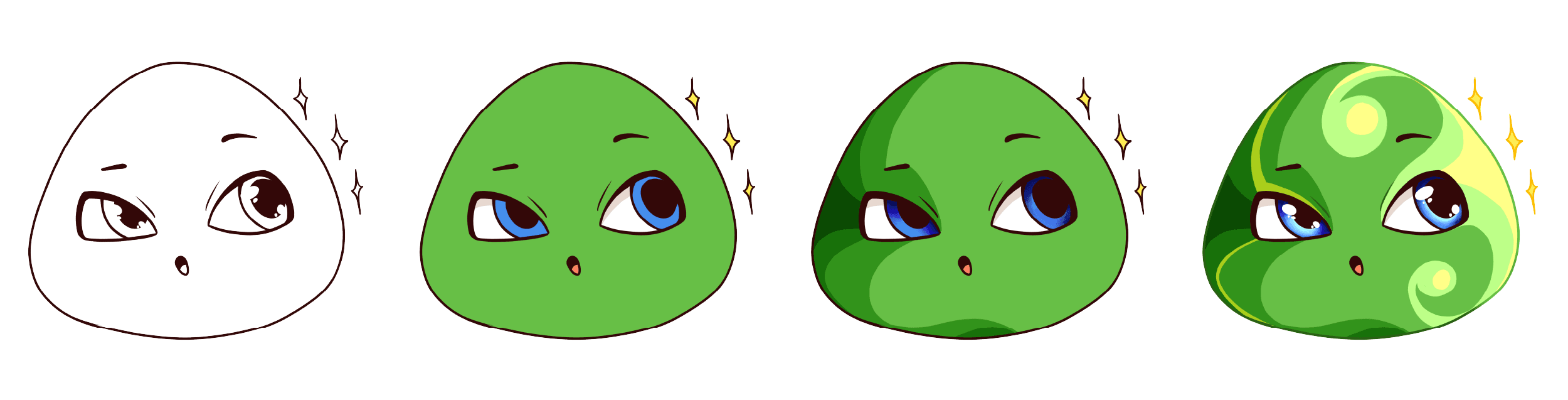
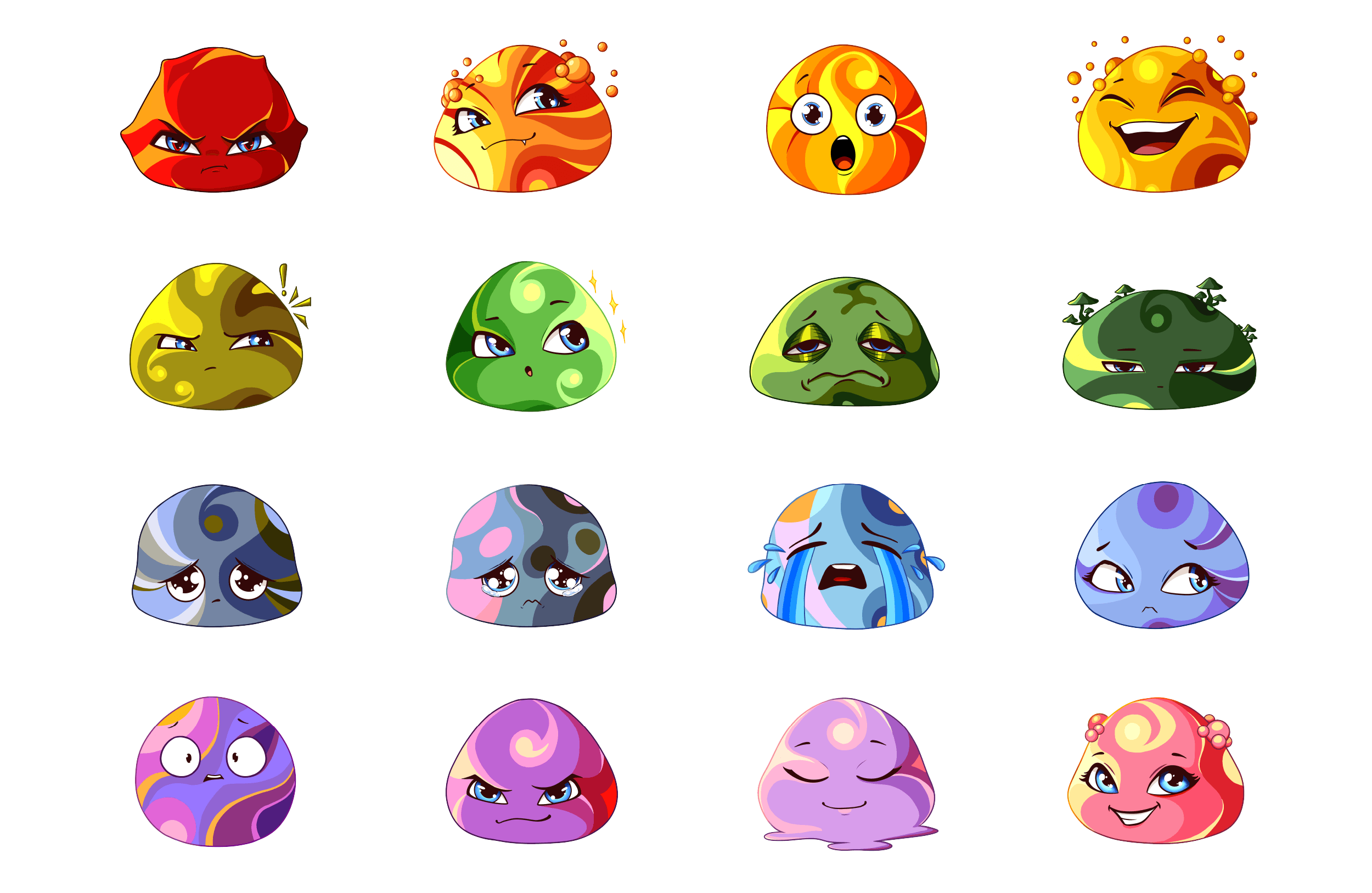
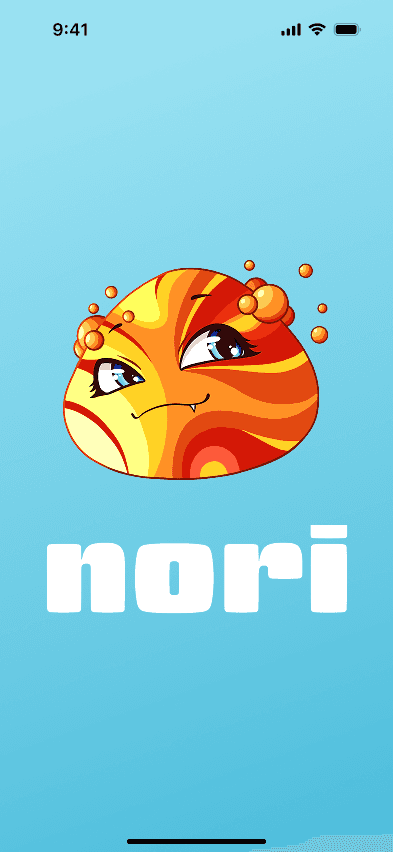
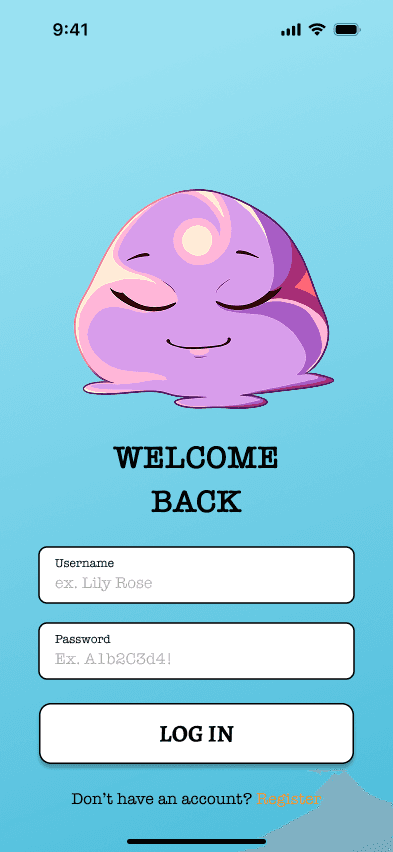
The NORI mascot is represented by the “Blob.” I chose this character because, just like emotions and feelings, it is constantly changing and fluid. This slime-like form reflects the emotional shifts and complexity many teenagers experience during puberty.
To further represent that emotional complexity, I:
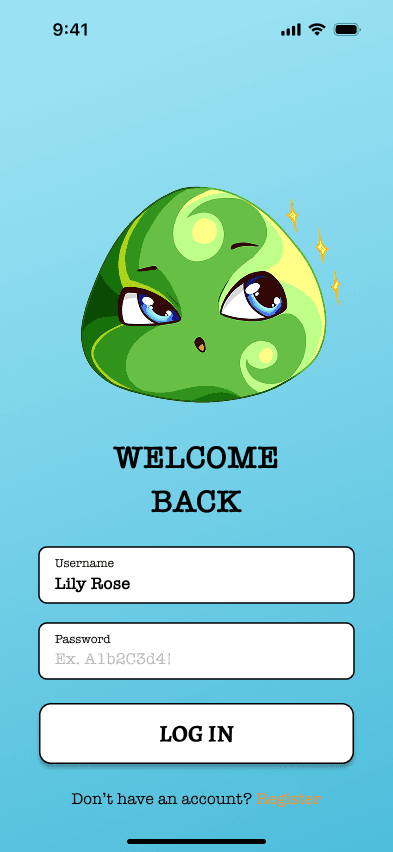
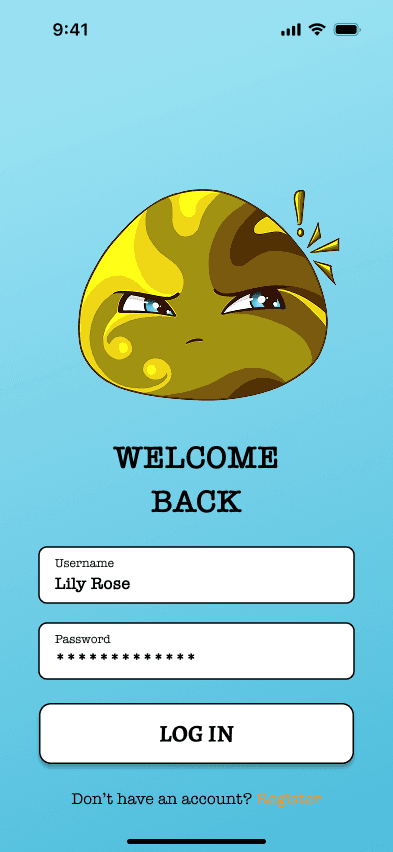
Assigned each emotion-based “Blob” a colour that reflects that feeling according to colour psychology.
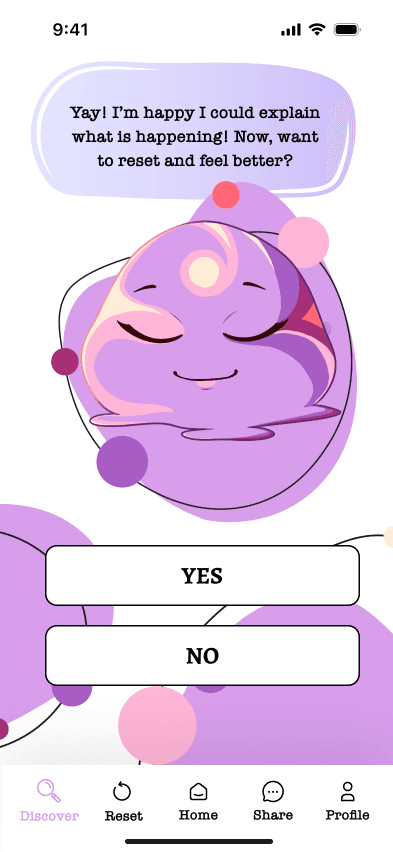
Because every emotion has both positive and negative sides, I used warm, light colours on one side of the Blob to represent the positive side, and colder, darker shades on the other side to represent the more difficult side of the same emotion.
Lastly, I added colour swirls and allowed some colours to encroach to the opposite side to show how no emotion is ever simple, and how its positive and negative sides are codependent and constantly intertwined.
Mascots create emotional distance that allows users to observe their wellbeing objectively. Users often struggle to evaluate themselves, but they can easily recognize when the creature they're caring for appears exhausted or sick.
The NORI mascot is represented by the “Blob.” I chose this character because, just like emotions and feelings, it is constantly changing and fluid. This slime-like form reflects the emotional shifts and complexity many teenagers experience during puberty.
To further represent that emotional complexity, I:
Assigned each emotion-based “Blob” a colour that reflects that feeling according to colour psychology.
Because every emotion has both positive and negative sides, I used warm, light colours on one side of the Blob to represent the positive side, and colder, darker shades on the other side to represent the more difficult side of the same emotion.
Lastly, I added colour swirls and allowed some colours to encroach to the opposite side to show how no emotion is ever simple, and how its positive and negative sides are codependent and constantly intertwined.
Mascots create emotional distance that allows users to observe their wellbeing objectively. Users often struggle to evaluate themselves, but they can easily recognize when the creature they're caring for appears exhausted or sick.
The NORI mascot is represented by the “Blob.” I chose this character because, just like emotions and feelings, it is constantly changing and fluid. This slime-like form reflects the emotional shifts and complexity many teenagers experience during puberty.
To further represent that emotional complexity, I:
Assigned each emotion-based “Blob” a colour that reflects that feeling according to colour psychology.
Because every emotion has both positive and negative sides, I used warm, light colours on one side of the Blob to represent the positive side, and colder, darker shades on the other side to represent the more difficult side of the same emotion.
Lastly, I added colour swirls and allowed some colours to encroach to the opposite side to show how no emotion is ever simple, and how its positive and negative sides are codependent and constantly intertwined.
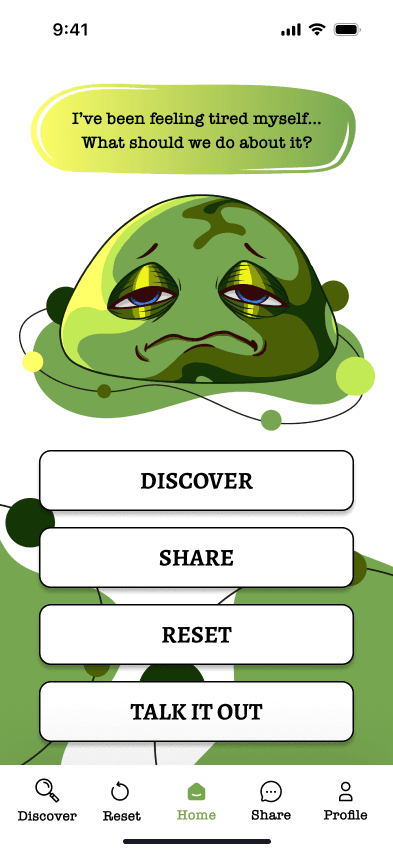
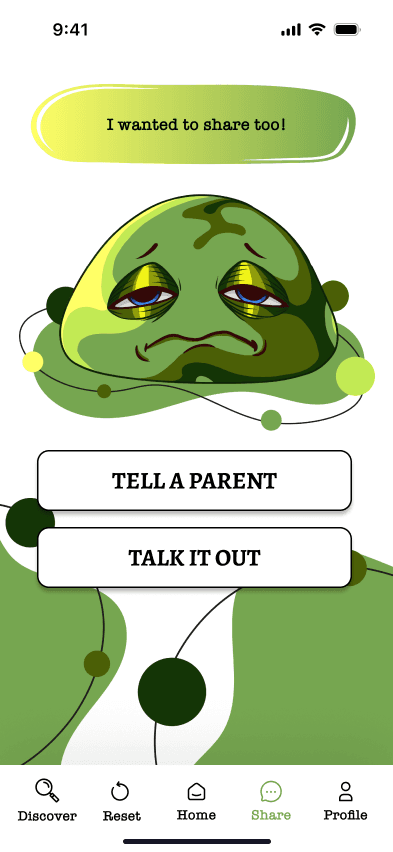
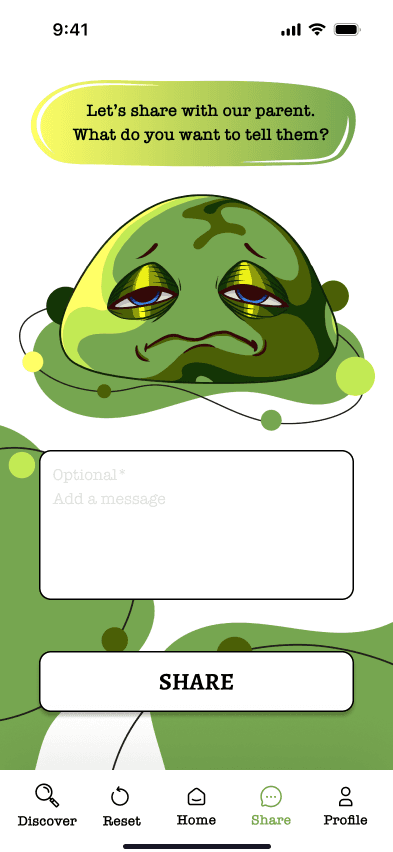
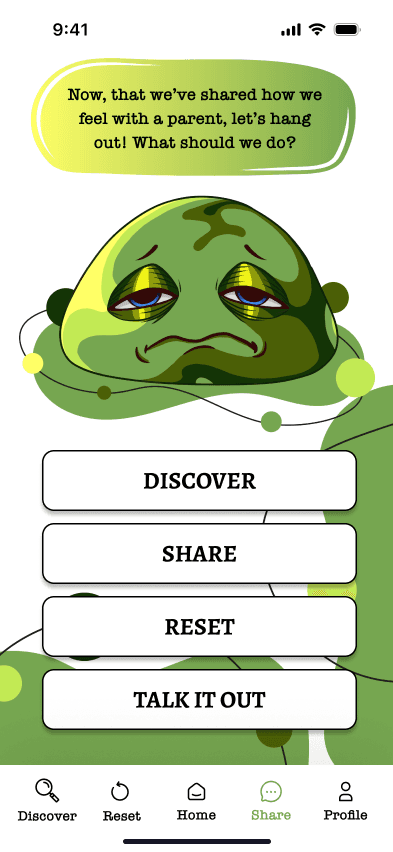
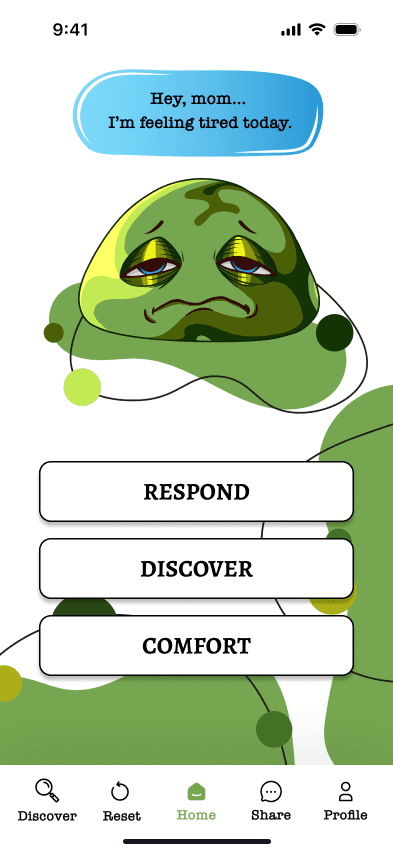
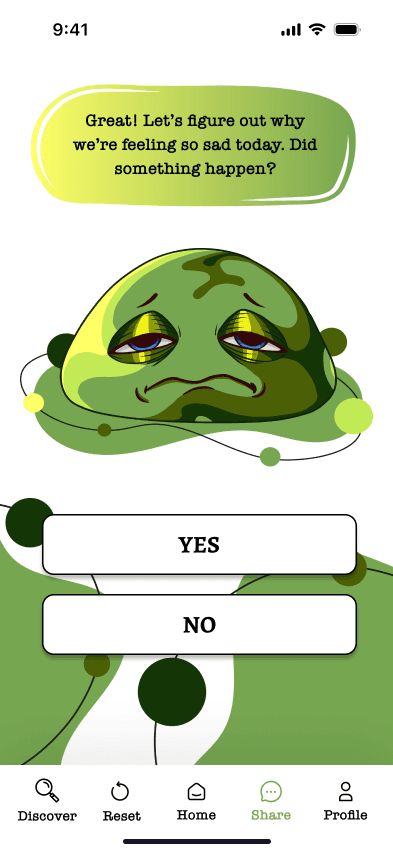
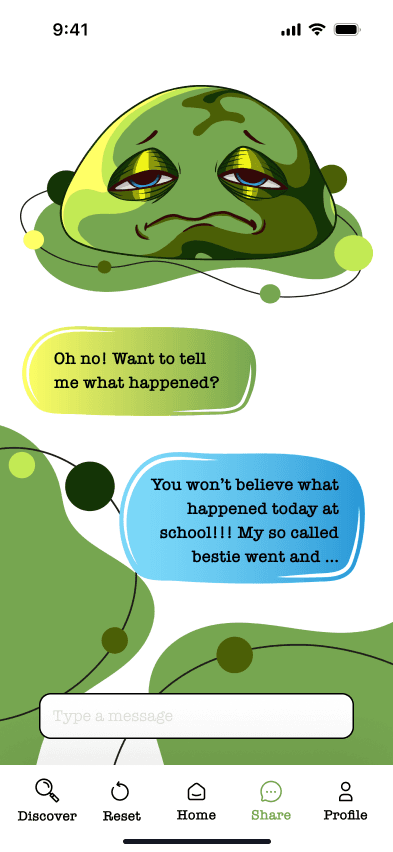
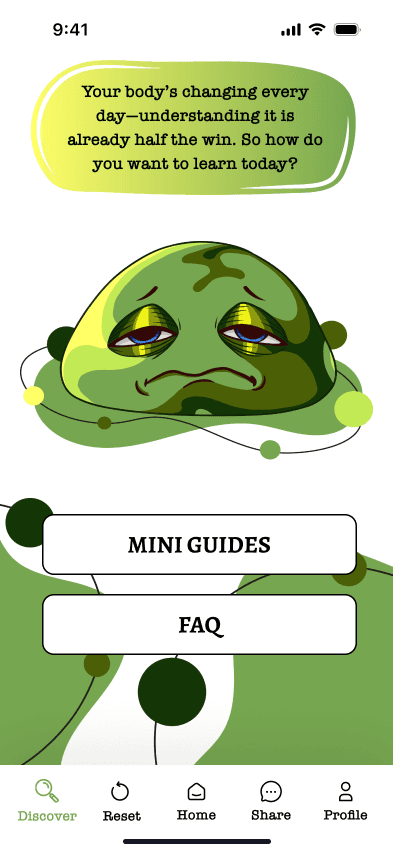
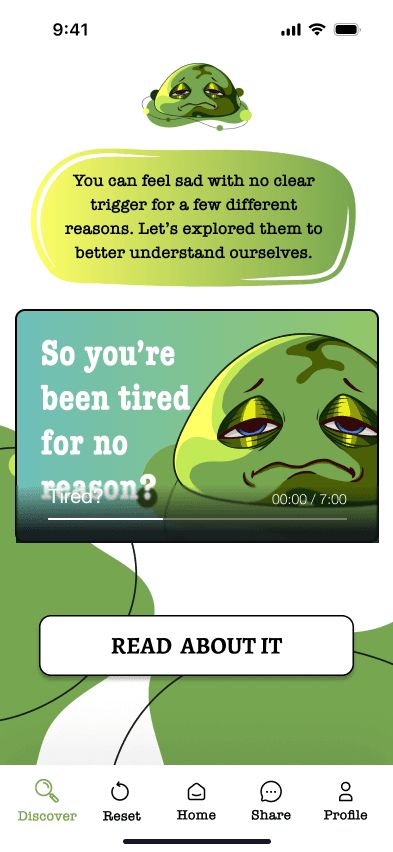
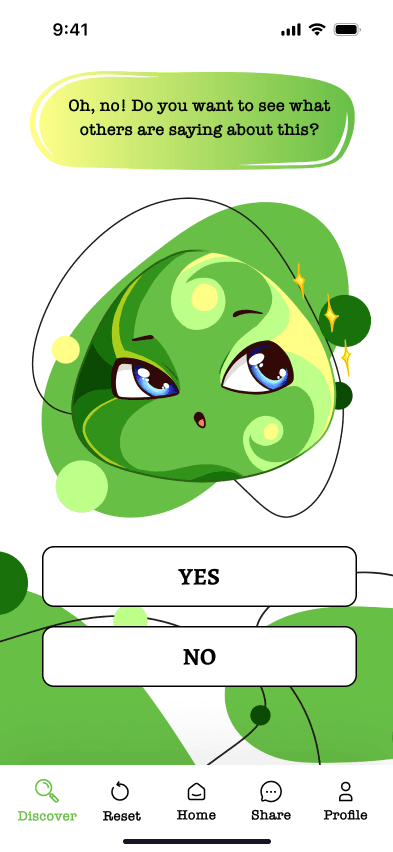
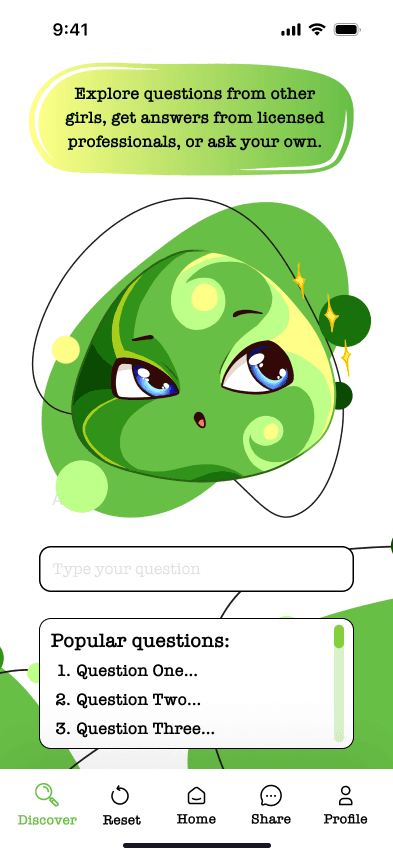
The app's screen breakdown
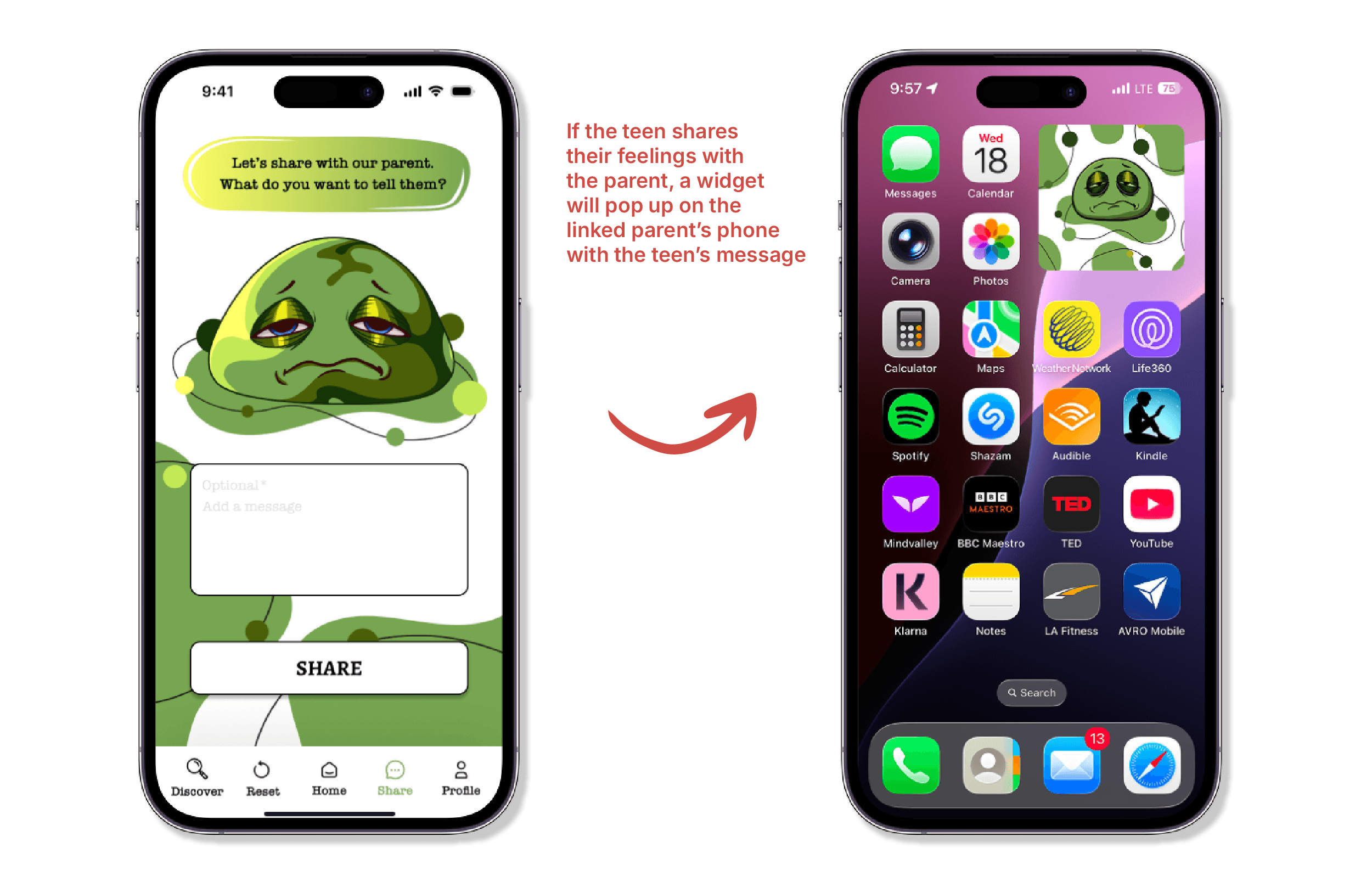
Parent Link
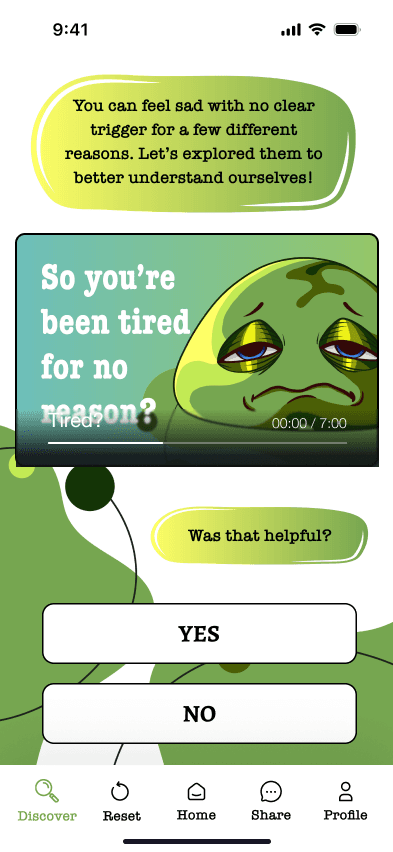
My primary research showed that teens want support but freeze up in face-to-face conversations. The optional parent-link feature acts as a low-friction bridge, allowing teens to broadcast their emotional state without having to say it face-to-face. It removes the pressure of confrontation while keeping parents informed and can make it easier to start the conversation in a way that feels comfortable for the child.
My primary research showed that teens want support but freeze up in face-to-face conversations. The optional parent-link feature acts as a low-friction bridge, allowing teens to broadcast their emotional state without having to say it face-to-face. It removes the pressure of confrontation while keeping parents informed and can make it easier to start the conversation in a way that feels comfortable for the child.
My primary research showed that teens want support but freeze up in face-to-face conversations. The optional parent-link feature acts as a low-friction bridge, allowing teens to broadcast their emotional state without having to say it face-to-face. It removes the pressure of confrontation while keeping parents informed and can make it easier to start the conversation in a way that feels comfortable for the child.
NORI is an app that:
Educates teens about puberty in a friendly, accessible way
Provides healthy coping mechanisms
Encourages open communication
with parentsAllows access to licensed professionals (optional future add on)
Figma Prototype
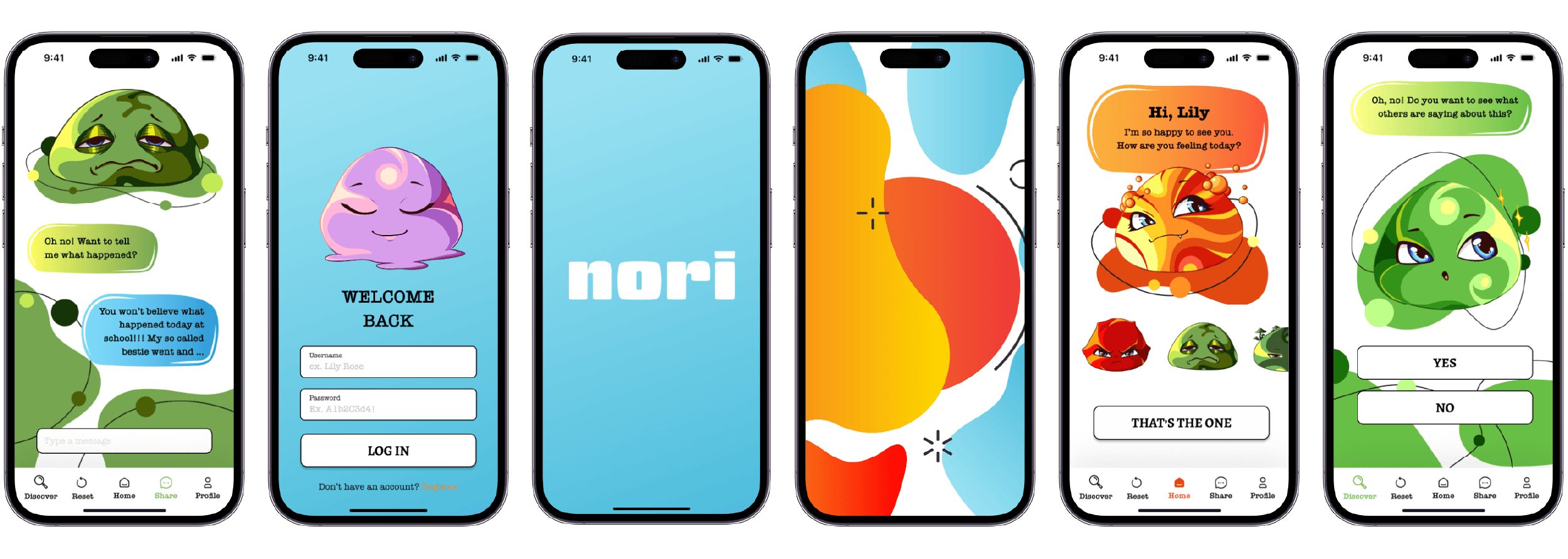
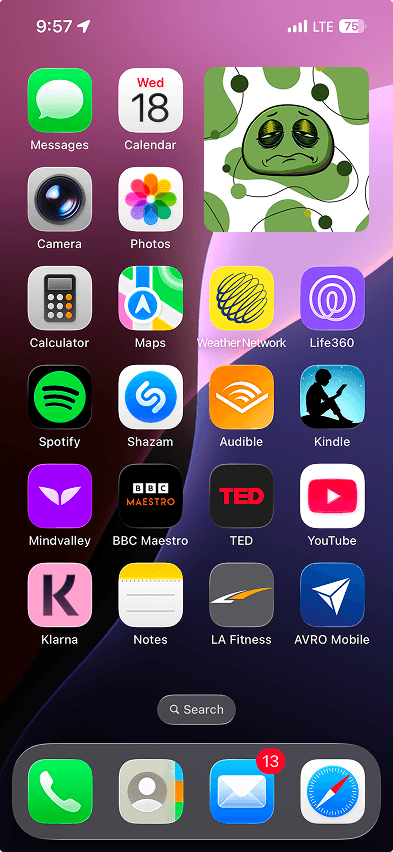
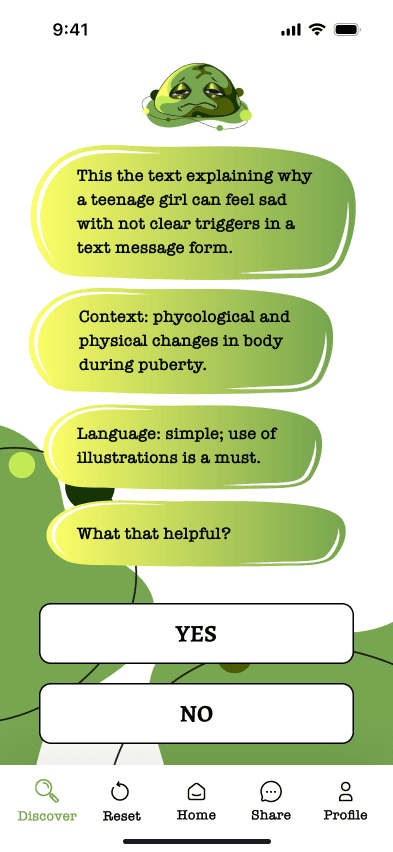
NORI app was developed with consideration for Apple Human Interface Guidelines and Material Design guidelines.
Future considerations include:
the "blob" being able to evolve as the users use the app into a creature of their own choosing
connections to Kids Help Line
optional licensed mental health professionals for users to contact in times of crisis
a closed community where girls can connect and support one another.
NORI app was developed with consideration for Apple Human Interface Guidelines and Material Design guidelines.
Future considerations include:
the "blob" being able to evolve as the users use the app into a creature of their own choosing
connections to Kids Help Line
optional licensed mental health professionals for users to contact in times of crisis
a closed community where girls can connect and support one another.
NORI app was developed with consideration for Apple Human Interface Guidelines and Material Design guidelines.
Future considerations include:
the "blob" being able to evolve as the users use the app into a creature of their own choosing
connections to Kids Help Line
optional licensed mental health professionals for users to contact in times of crisis
a closed community where girls can connect and support one another.
Beyond the Screen
Bringing the Nori universe to life required a mixed-media approach. I designed the core illustrations and brought them into motion using Midjourney and KlingAI, tying the entire visual narrative together in After Effects.
Bringing the Nori universe to life required a mixed-media approach. I designed the core illustrations and brought them into motion using Midjourney and KlingAI, tying the entire visual narrative together in After Effects.
Bringing the Nori universe to life required a mixed-media approach. I designed the core illustrations and brought them into motion using Midjourney and KlingAI, tying the entire visual narrative together in After Effects.
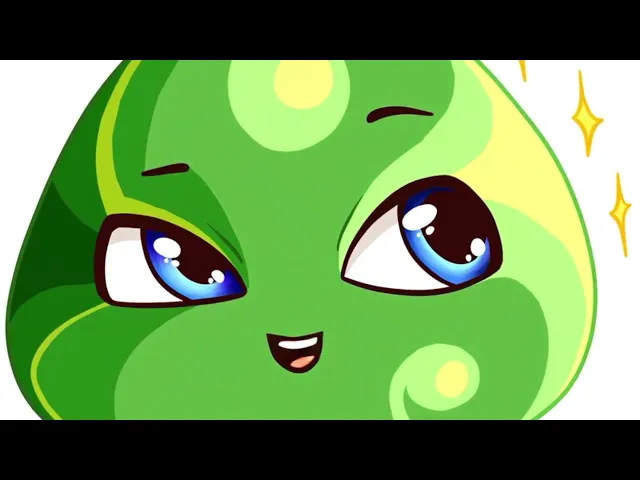
Nori is designed to feel like a friend, not just an interface. These physical extensions (anything from soft plushies to keychains and stickers) bring that digital comfort directly into the real world and create tangible, highly collectible artifacts.
Nori is designed to feel like a friend, not just an interface. These physical extensions (anything from soft plushies to keychains and stickers) bring that digital comfort directly into the real world and create tangible, highly collectible artifacts.
Nori is designed to feel like a friend, not just an interface. These physical extensions (anything from soft plushies to keychains and stickers) bring that digital comfort directly into the real world and create tangible, highly collectible artifacts.